2026 Completed Projects
Numerous projects have been completed during the first five months of 2026. They include:
1. Repair plaster in the Gathering Room
2. Apply fiberglass sheets to Kitchen and Dining Room walls
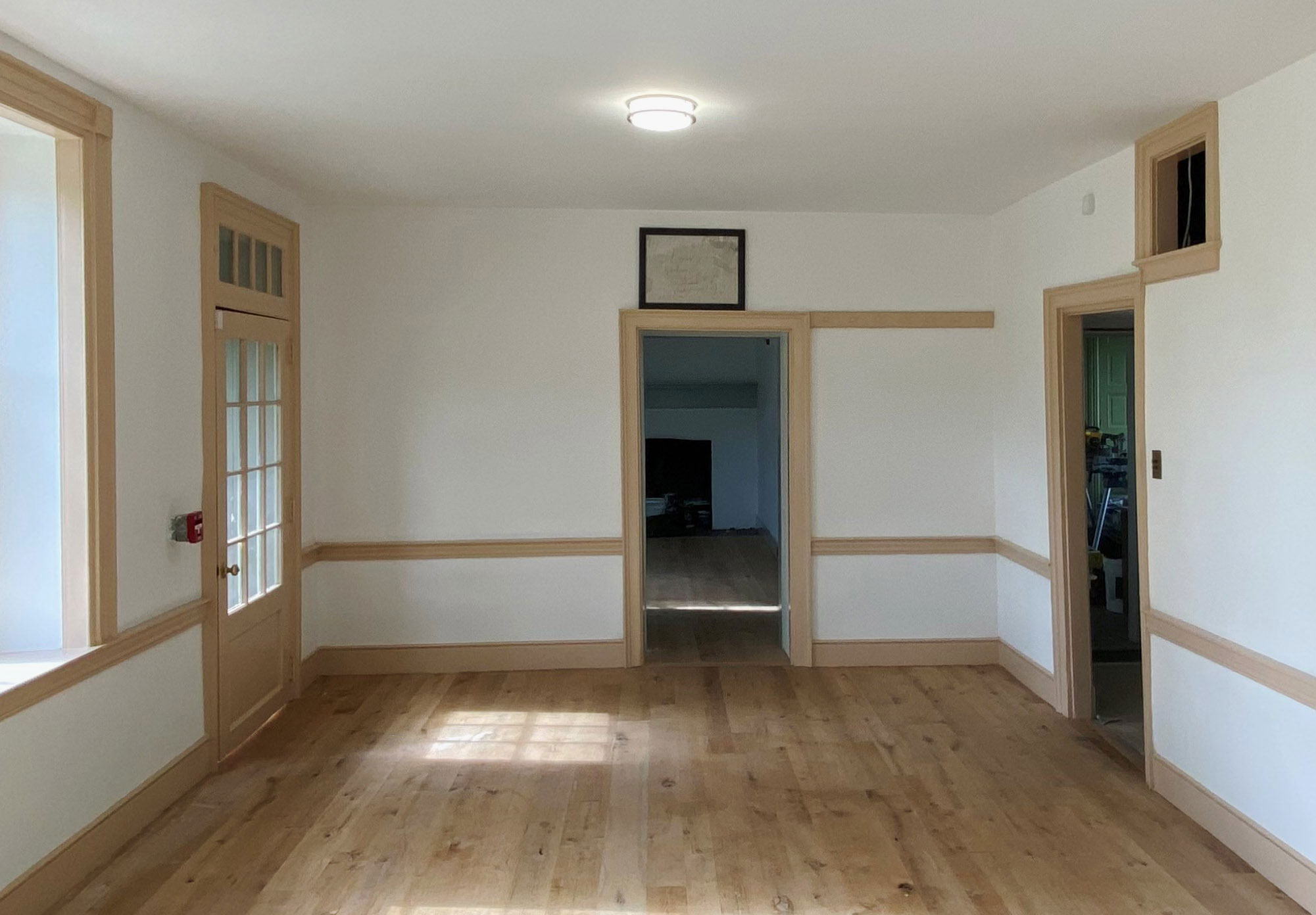
3. Install reproduction molding in Dining Room
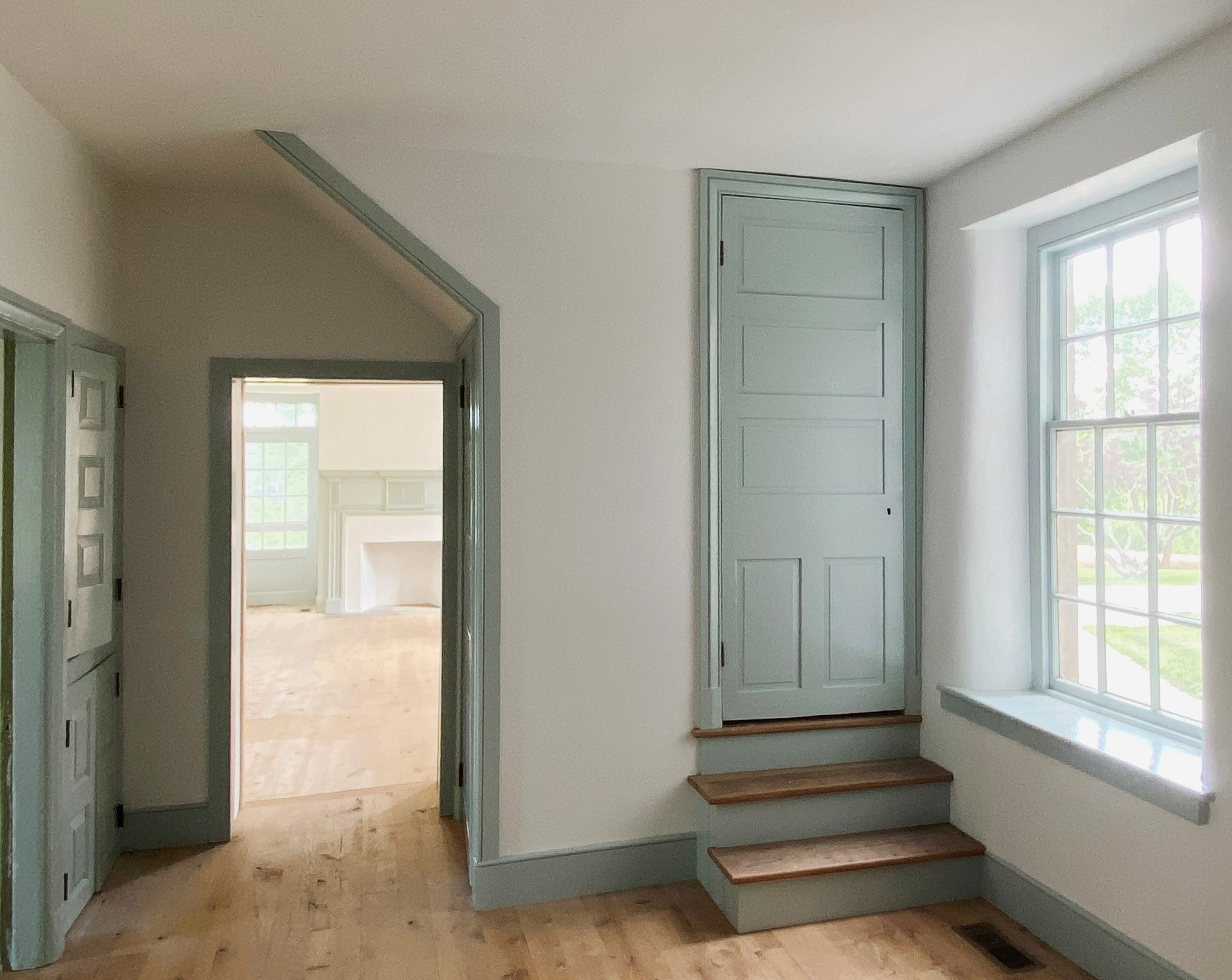
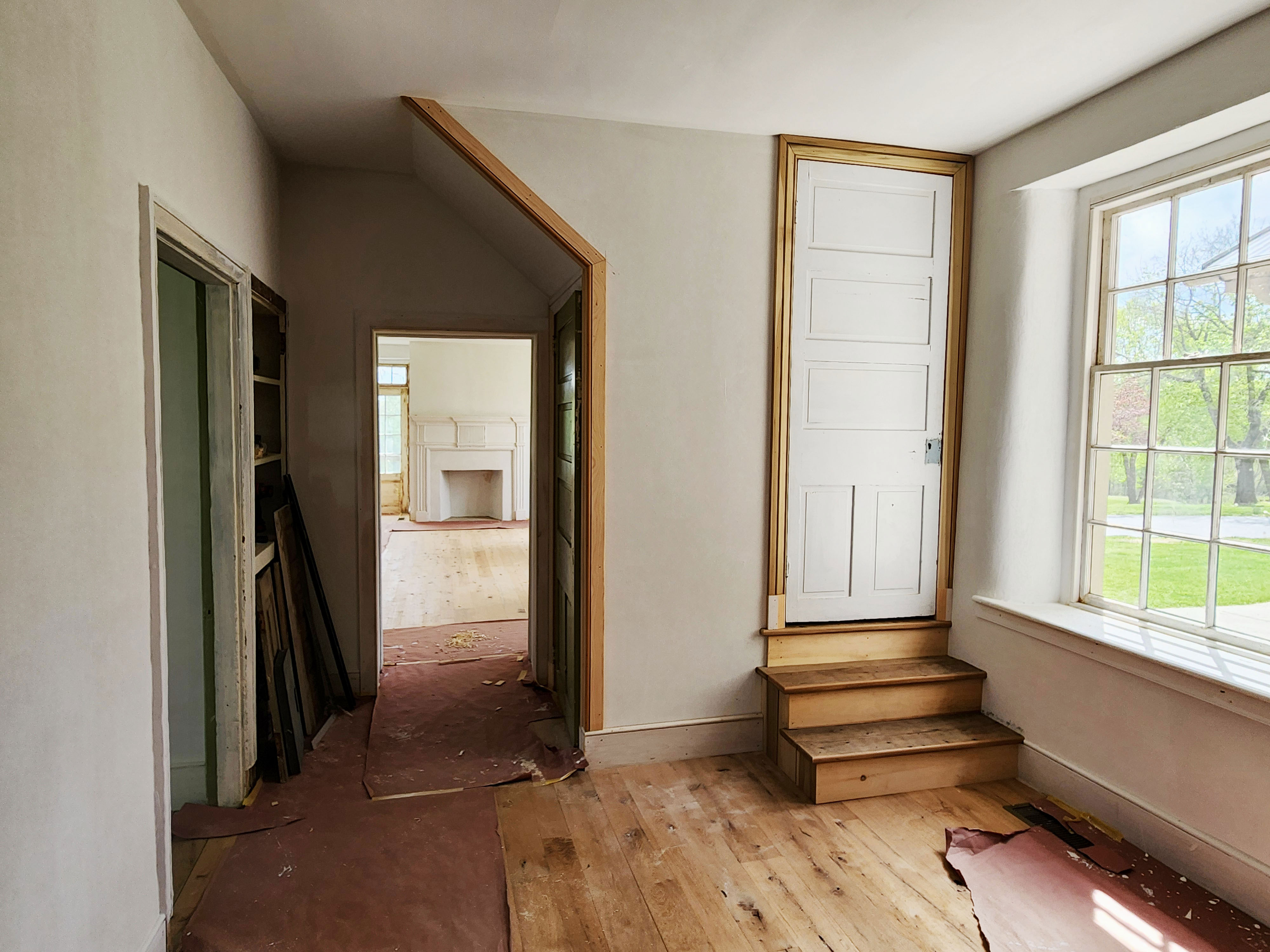
4. Install molding, doors and entry steps to replica Kitchen winder stair enclosure
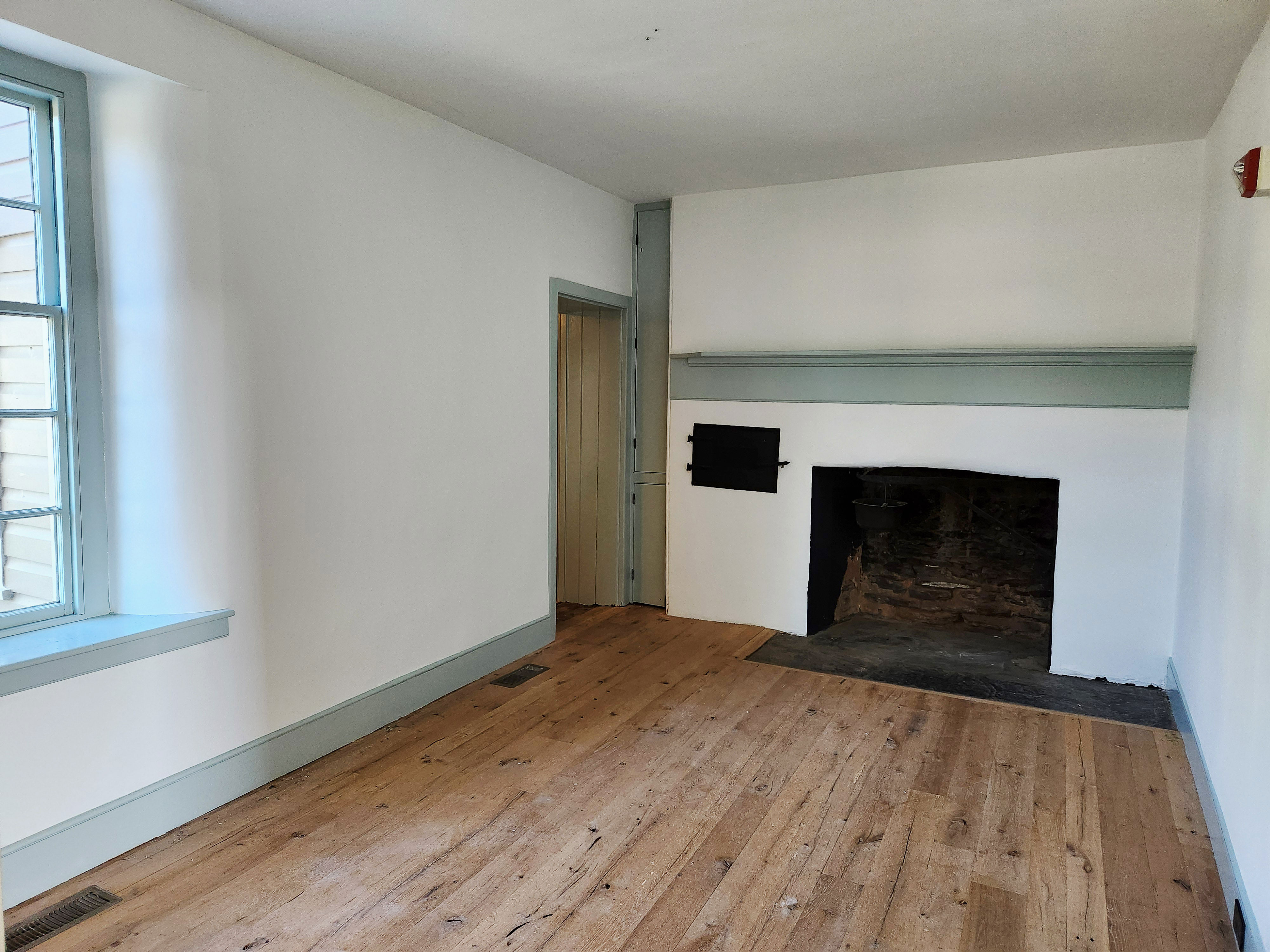
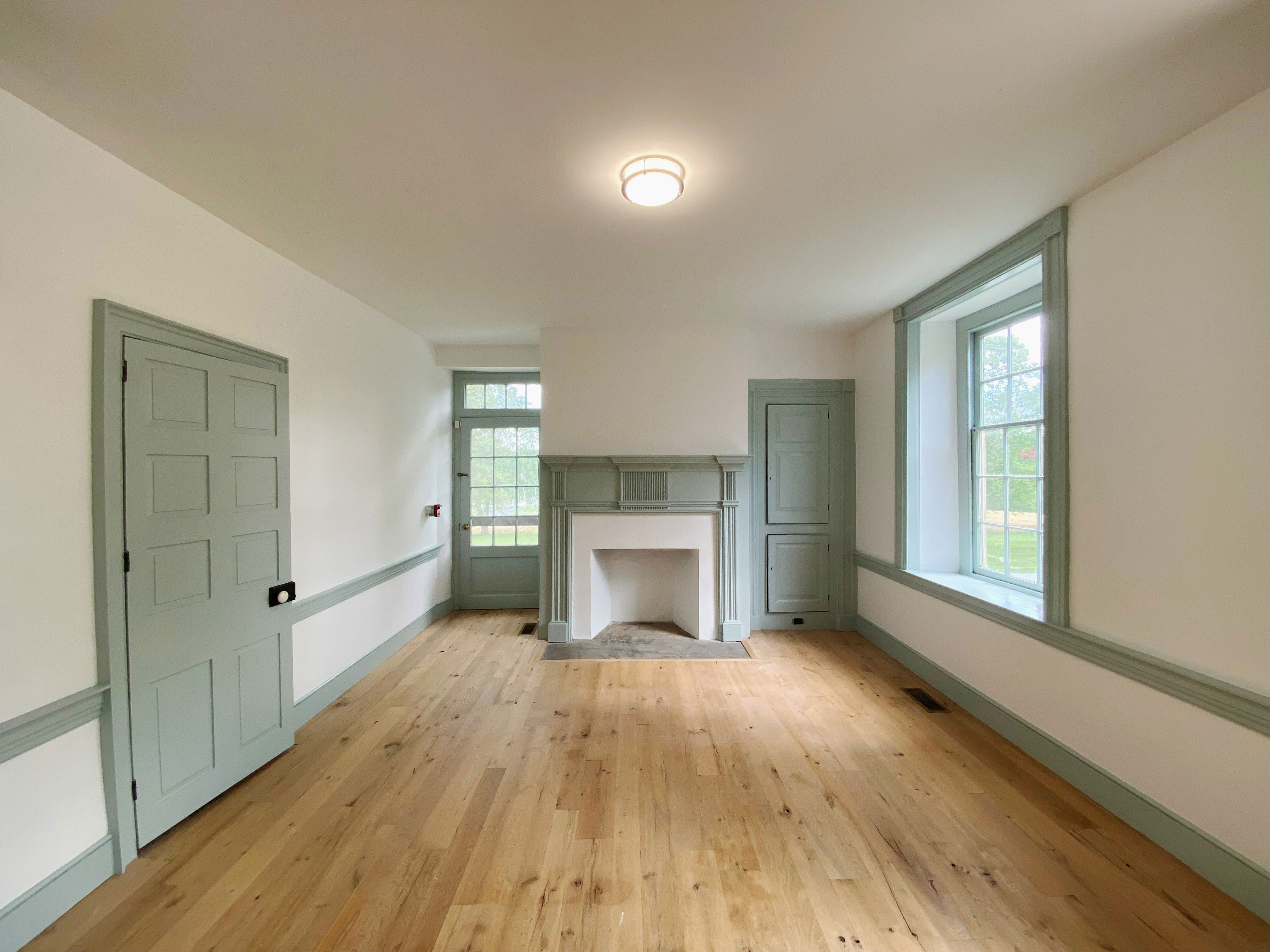
5. Paint the Kitchen and Dining Room using colors identified in the Preservation Plan
1. Repair Plaster in Gathering Room
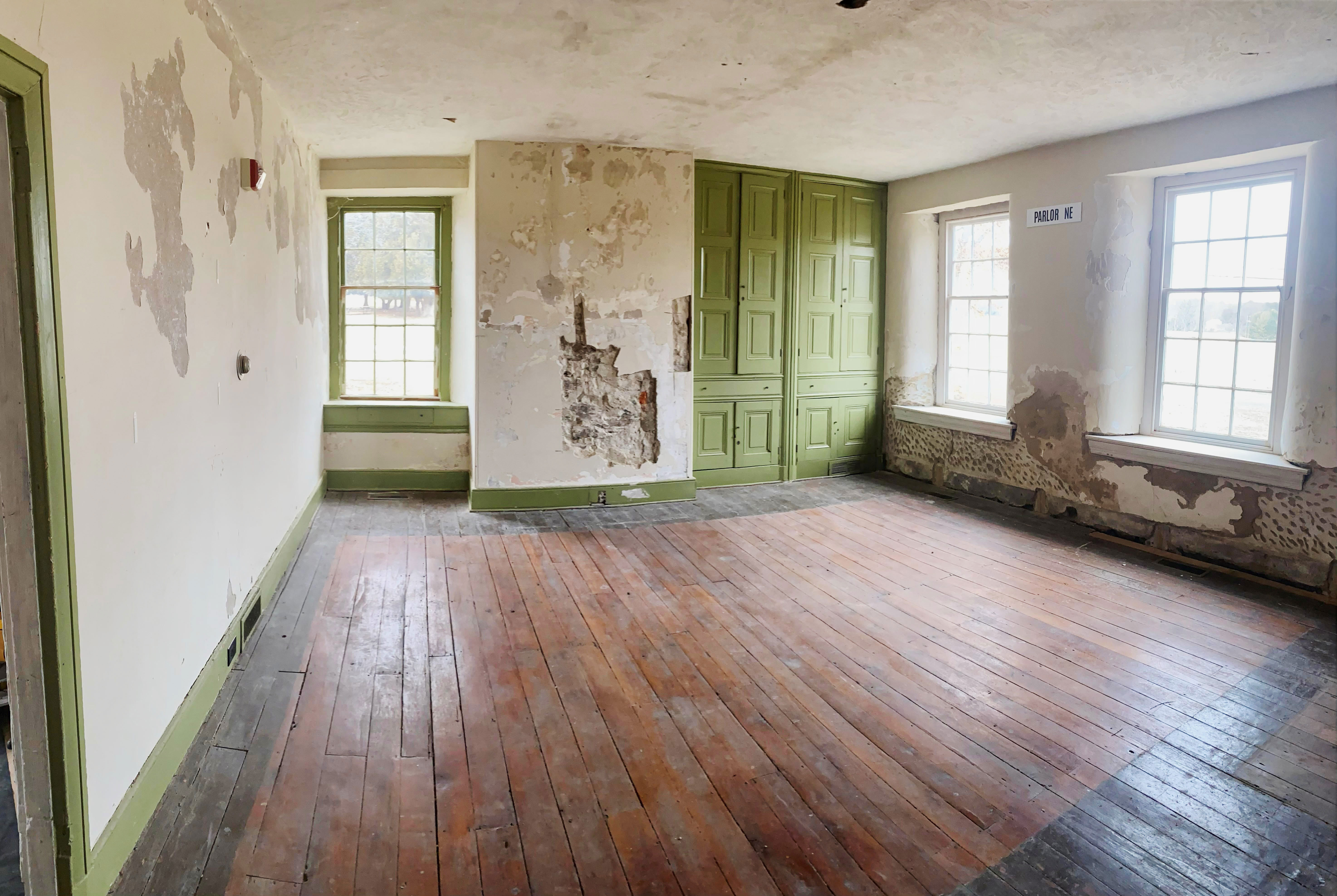
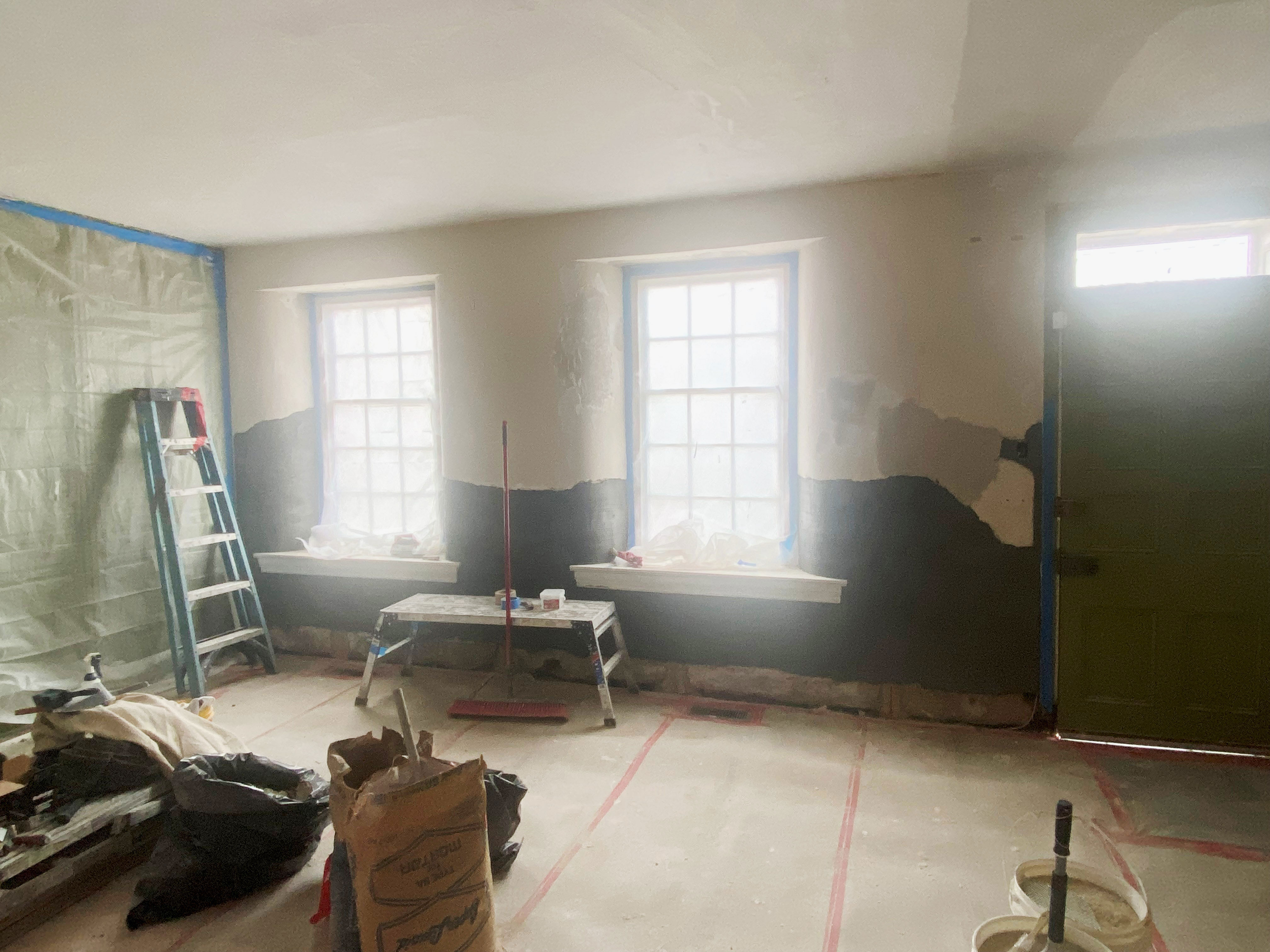
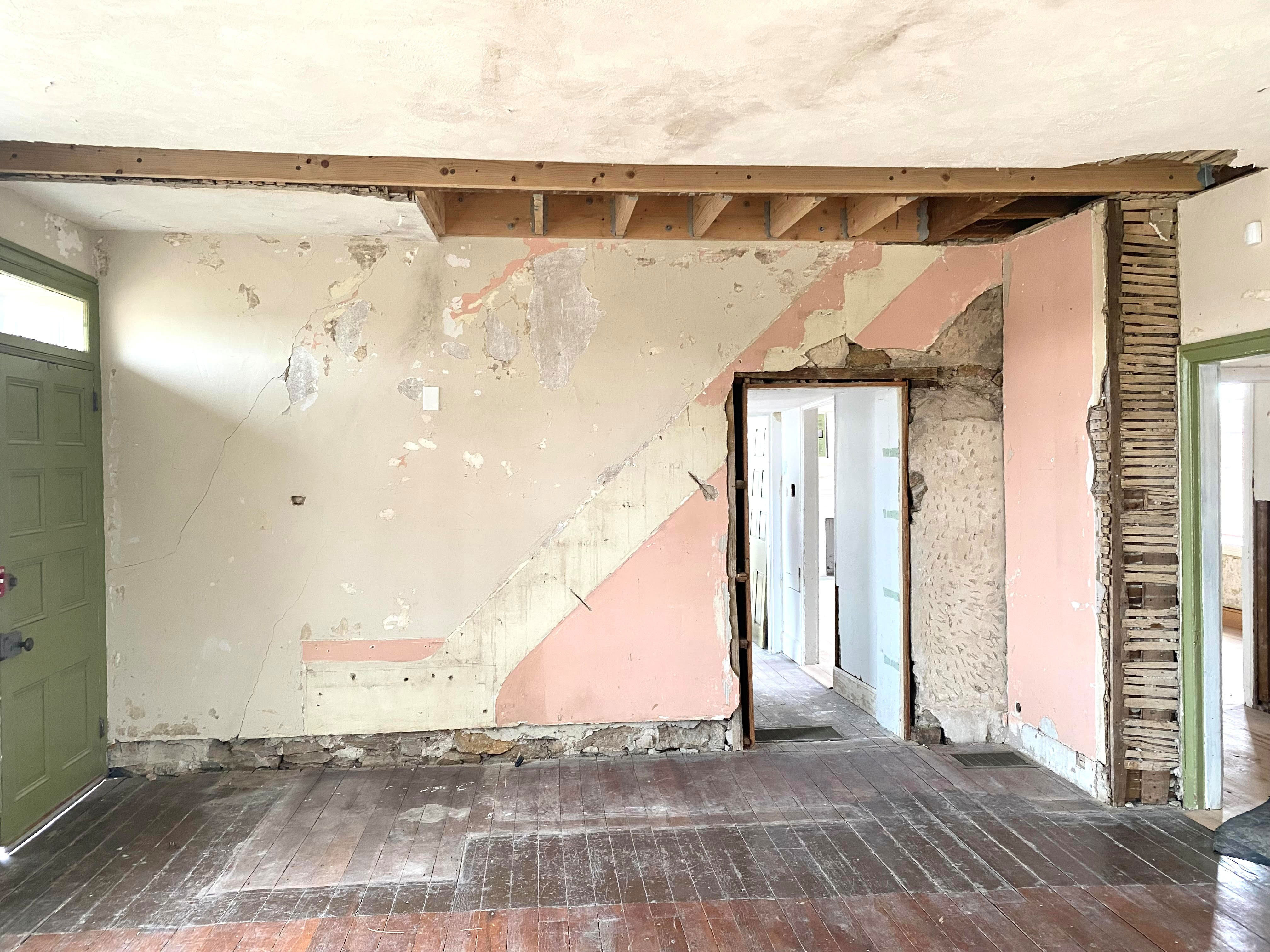
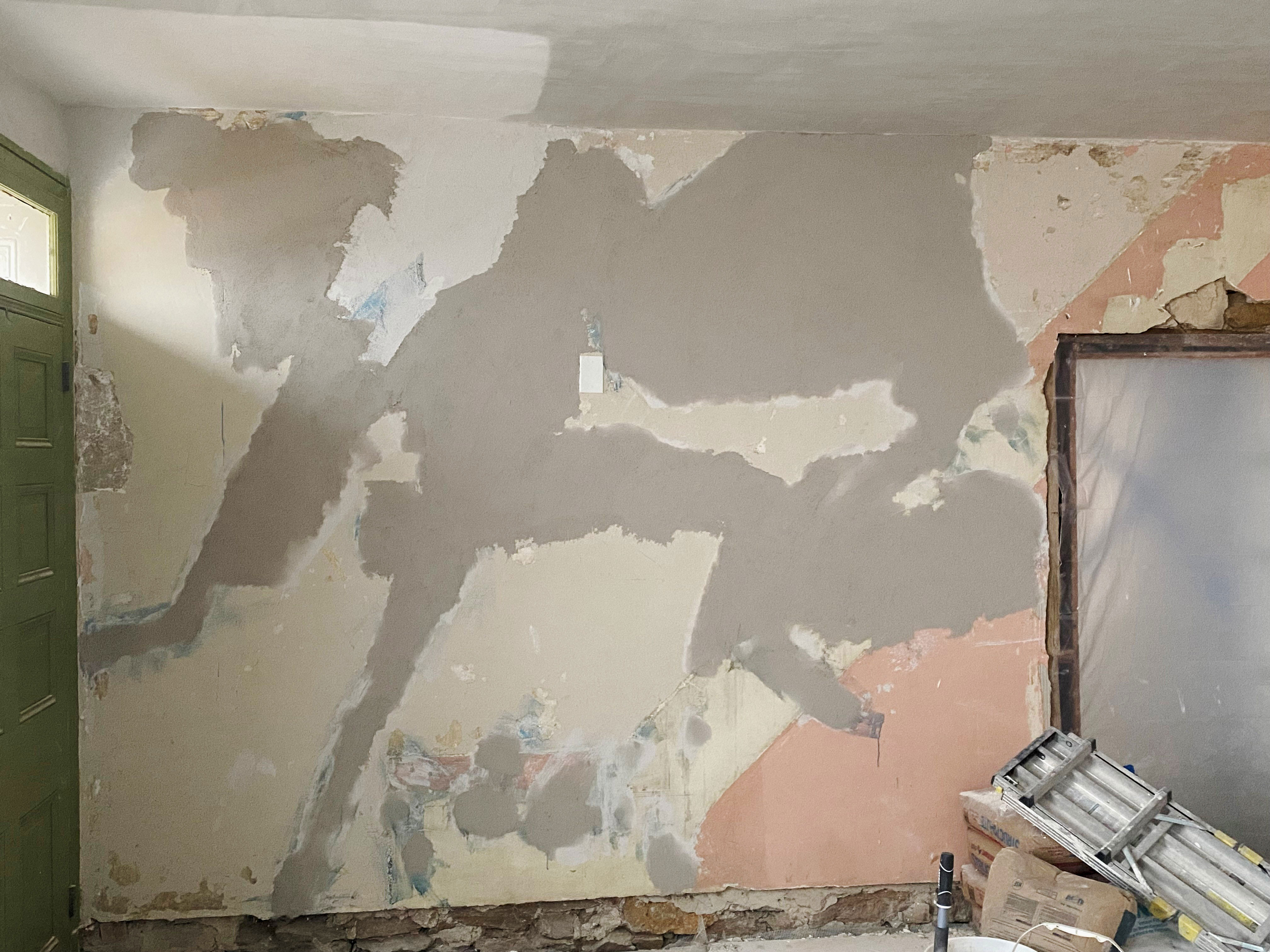
We have been awarded a 50% match Keystone Construction Grant by the Pennsylvania Historical and Museum Commission (PHMC) to refurbish the plaster in the c. 1841 Gathering Room at Barnard Station. As with any original material, movement of the structure and moisture intrusion has decayed the plaster system over the past 184 years. The causes of these problems have been addressed so the time has come to repair the internal finishes. This was a very involved project requiring removal of loose plaster from the walls and ceiling, adding wood lath strips and metal mesh to several areas and applying layers of plaster which required days of curing between applications. Below are before and after photos.
2. Apply Fiberglass Sheets to Kitchen and Dining Room Walls
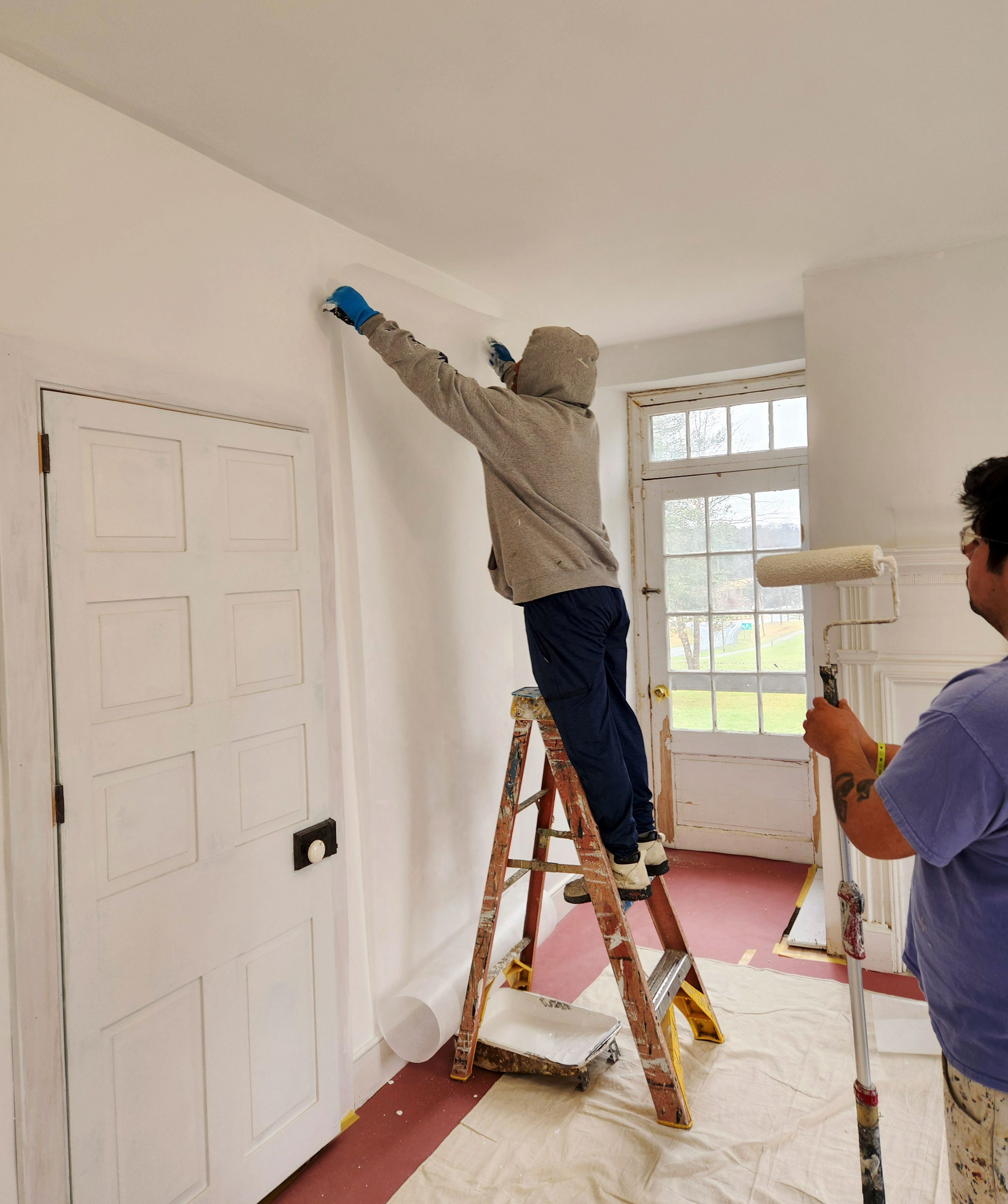
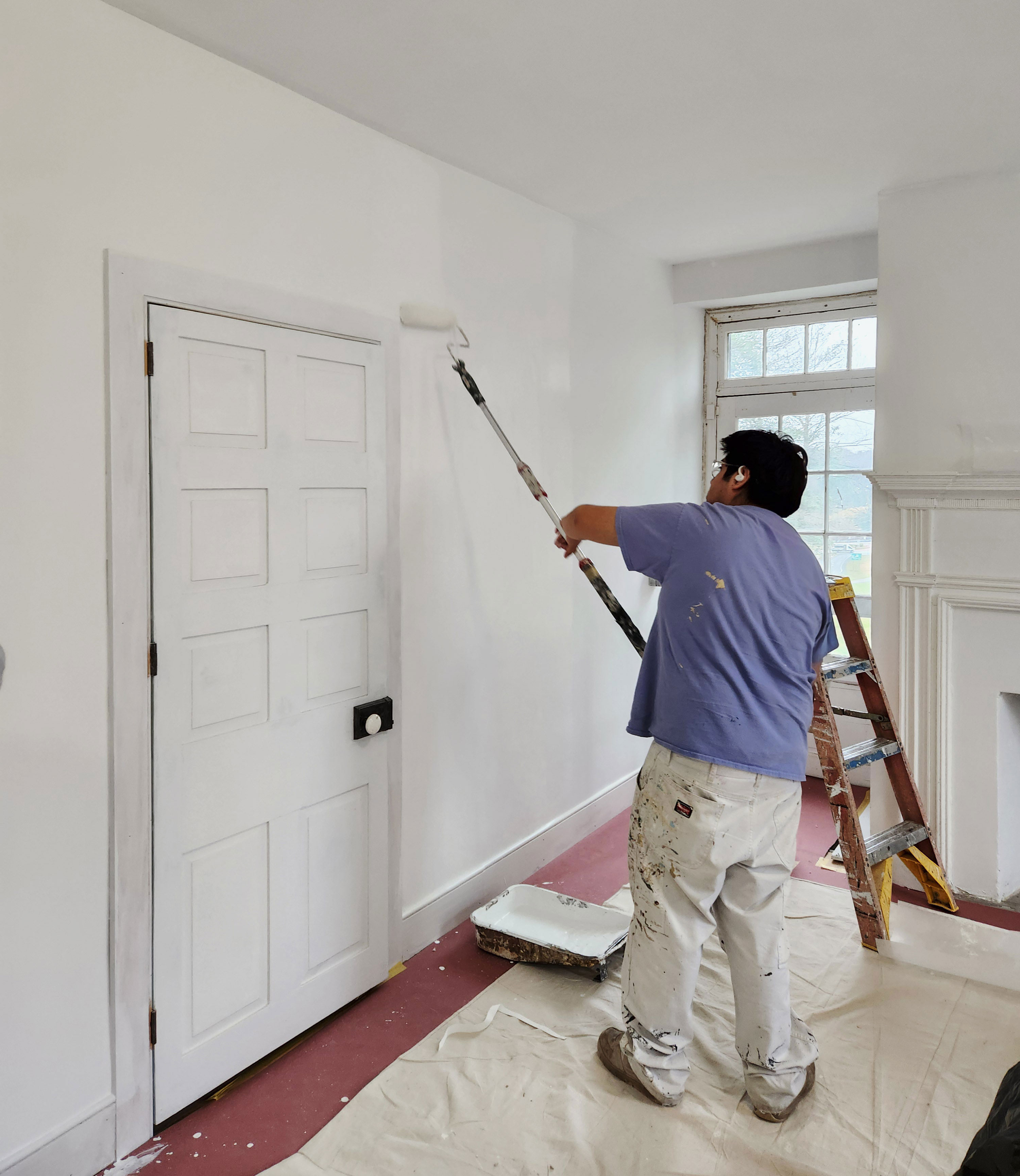
The aged plaster in the Barnard House dining room and kitchen tended to crack and chip within a few years of repairs. To protect the walls from future cracking, Fiberglass Mat Roll was applied using INSL-X, an adhesive resin primer paint.
3. Install Reproduction Molding in Dining Room
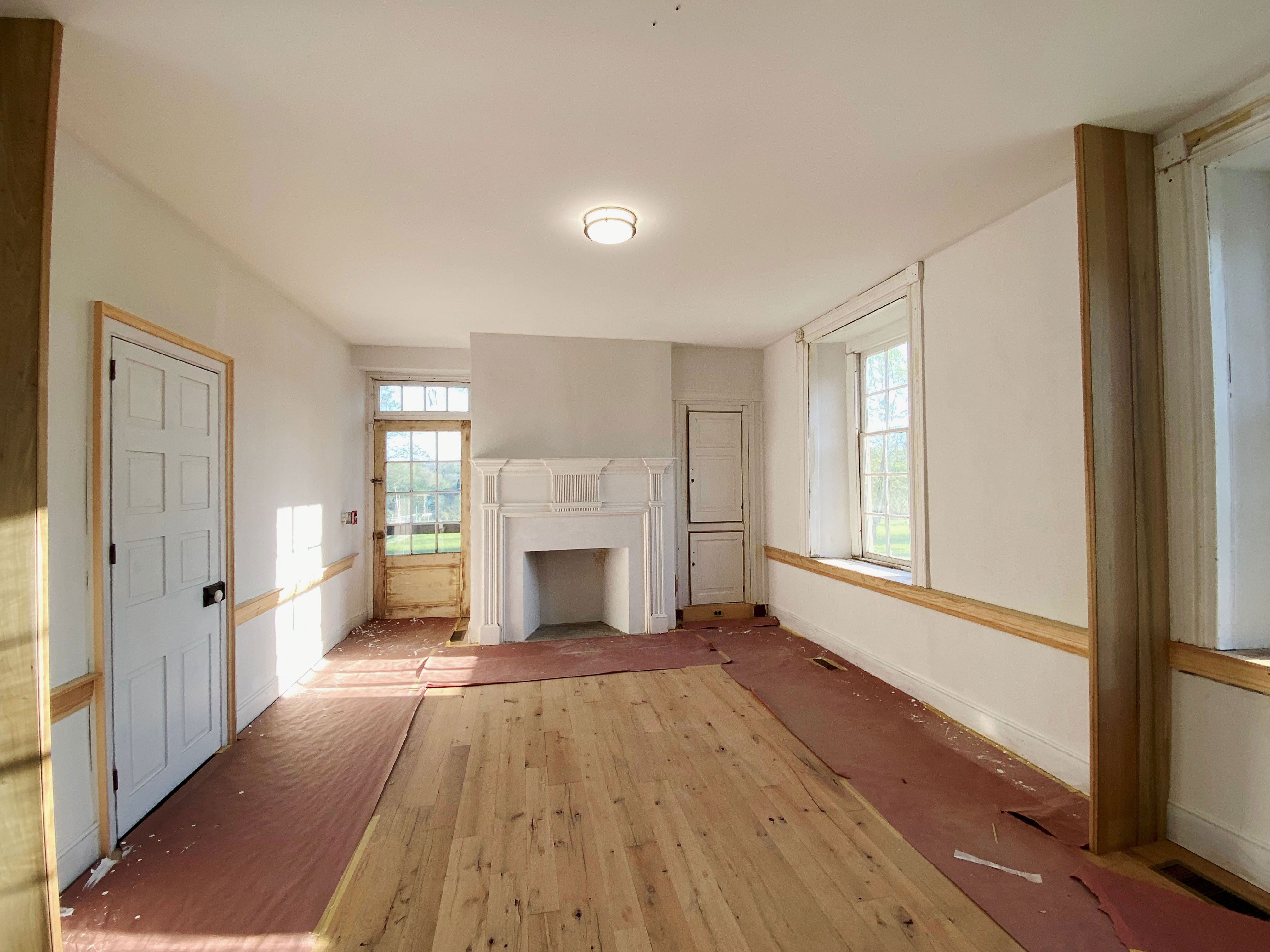
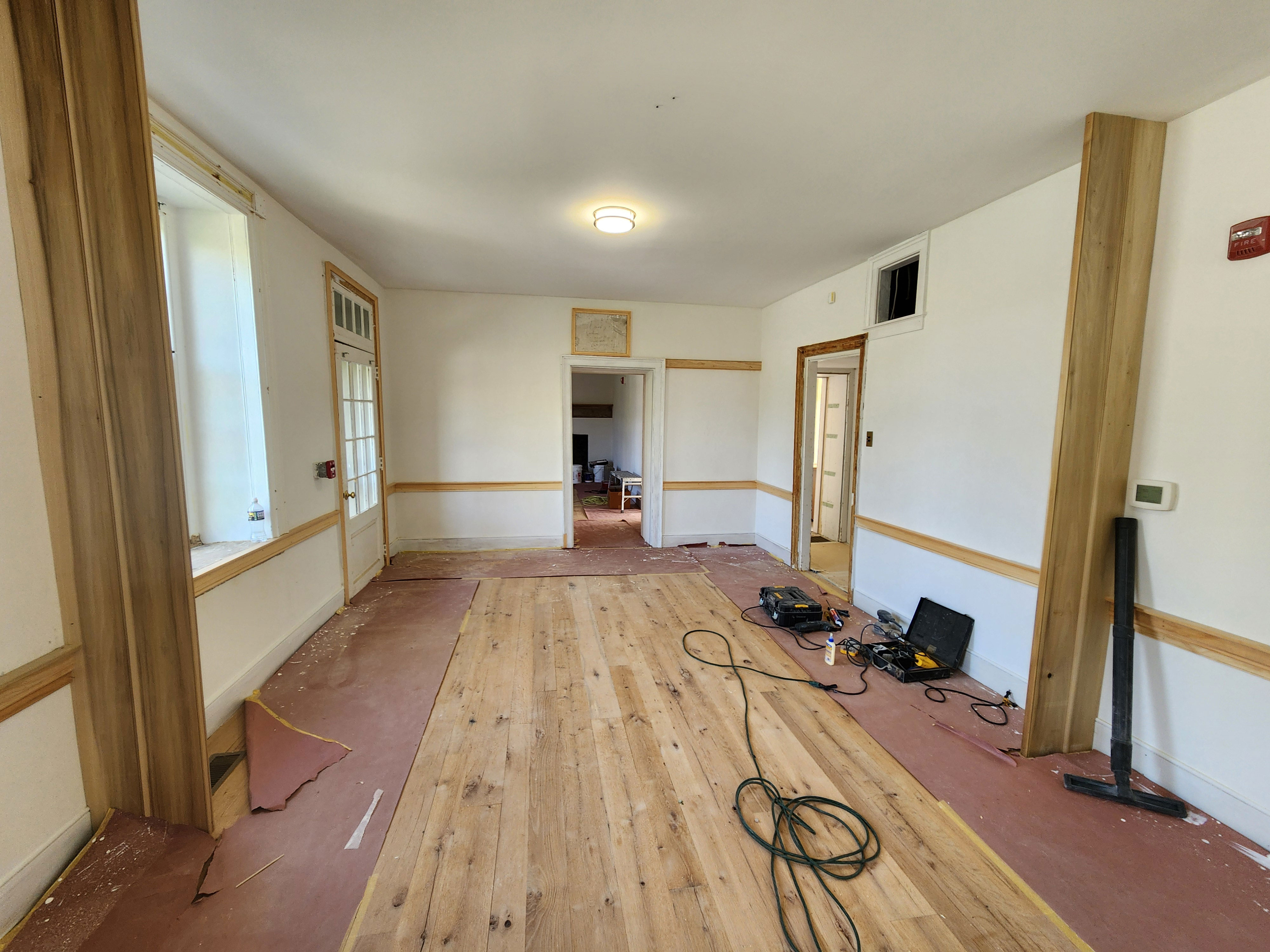
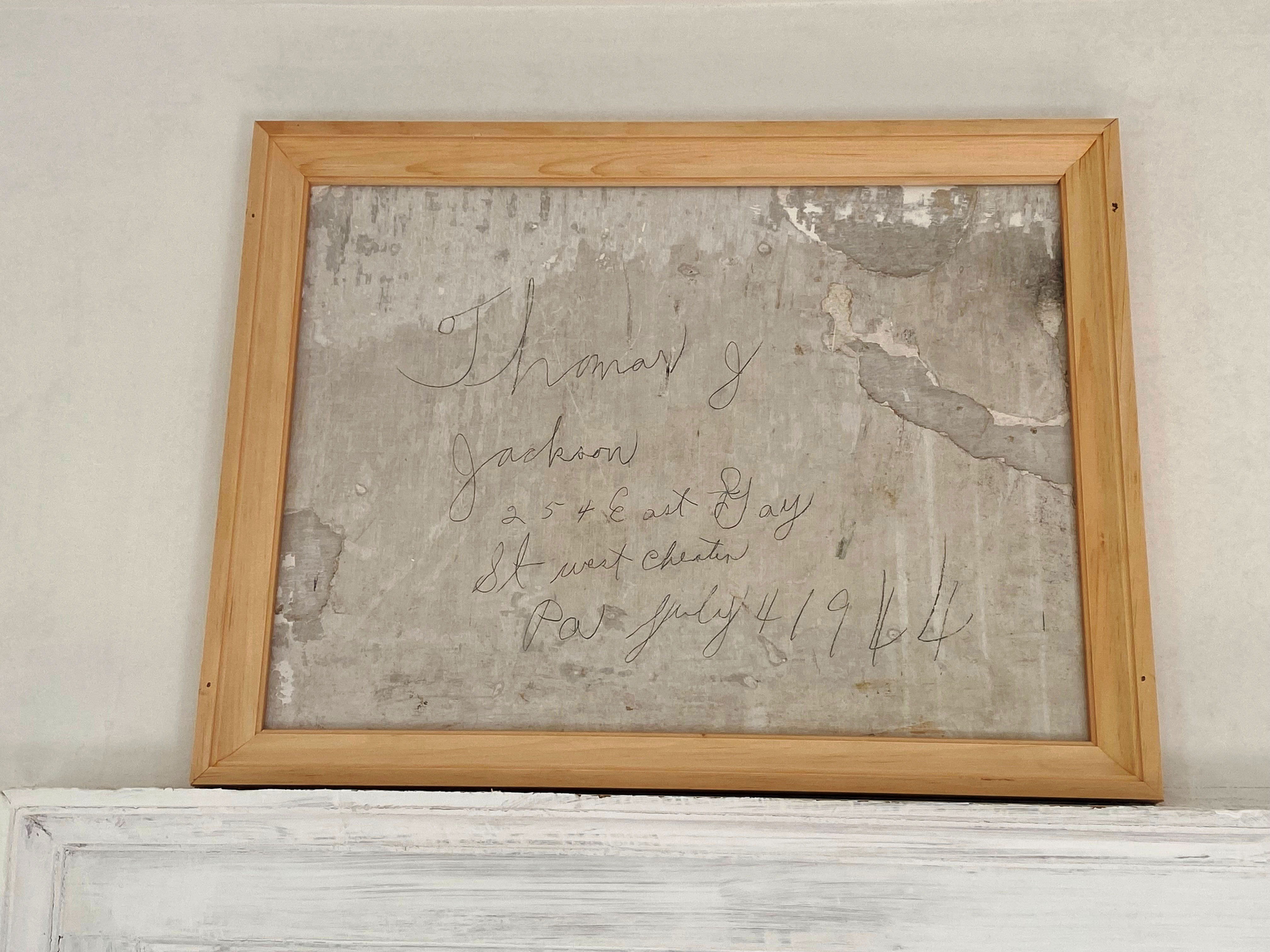
The reproduction woodwork in the c. 1829 Dining Room has been installed. All work was done using clues in the old plaster and framing. First we recreated part of the vertical beadboard wall which divided the space into its original two rooms – a Dining Room and a Keeping Room. Only two vertical sections of board were installed on each side of the room to interpret the space, but allow for a brighter, more open experience. The chair rail profiles were different in each room. As with Federal style detailing, the window sill height set the elevation of the chair rail. The Dining Room had a larger molding profile, matching the one in the front parlor. The Keeping Room had a smaller one. We chose to replicate a similar sized chair rail located in one of the upstairs bedrooms. A witness window was created to preserve the 1944 signature of carpenter Thomas J Jackson.
4. Install Molding, Doors and Steps in Replica Kitchen Winder Stair Enclosure
The winder stair encloser was completed, restoring the 1850s look of the area. Molding was added and antique doors were repurposed from the second-floor bedrooms (doors were not in their original locations). White oak hardwood floors were installed within. Two steps of entry stairs were constructed completing the appearance of the winder stair. There are no actual stairs to the second floor. The space behind both doors will be used for storage.
5. Paint Kitchen and Dining Room
Kitchen and Dining Room were painted using colors identified in Preservation Plan. The Dining Room has a partial dividing wall to illustrate when it was two rooms in 1829 - Keeping Room and Dining Room.